Deep Topiく
Introduction
Welcome to the deep topik discussion board for today’s ‘podcast’. We are going over a few topics for analysis, debates, and so on, with the speaker and the audiences.
Da Topic
The topic revolves around, mainly:
- AI, Intelligence, what makes human a “human”, a thesis of (How to build a conscious machine., see in here) relevant position, questions of self in correlation to machines, of the models of life and human uses.
- Sociological issues and histories.
In between sessions, it is basically ‘free-talk’, until the justification is made. Within each section, we both discuss, and answers questions from the audiences. The time is separated into debate time and wrap-up time accordingly.
Topic 1. Artificial intelligence
The first topic is indeed, about artificial intelligence
S1
- When you hear of the word artificial intelligence (AI), what do you think of it?
- What do you think being artificial means?
- What do you think being intelligent means?
- For intelligence, can you provide example(s) on that, and the fallacy within said examples?
S2
What do you think when you see the following argument:
(I)f someone touched it (= the machine) in a particular place, it would ask what one wishes to say to it, or if it were touched somewhere else, it would cry out that it was being hurt, and so on. But it could not arrange words in different ways to reply to the meaning of everything that is said in its presence, as even the most unintelligent human beings can do. [Descartes, 1700]
For whereas reason is a universal instrument that can be used in all kinds of situations, these organs need a specific disposition for every particular action. It follows that it is morally impossible for a machine to have enough different dispositions to make it act in every human situation in the same way as our reason makes us act.
If a machine only acts based on what it’s organs are designed to do, then how does it possess the capabilities to learn?
S2
How about,
The frame problem is the problem that an AI cannot autonomously distinguish important factors from unimportant ones when it tries to cope with something in a certain situation.
Take an example of the normal cashier. Theoretically, and perhaps realistically speaking, a high schooler can be trained in a rather hasty fashion to do the job. While doing such work, there are many factors we take for granted. For example, during the process of using the computer to input the amount of cash required per transaction making, there might be a few terminal differences between different interface. The cashier knows that, and adapt to it. If she encounters an angry or hurry customer, the cashier can also act accordingly, without the consideration for the performance. “If the customer is in a hurry, then maybe I should use this or that or skip this”. Or even “If I push this button, then the trading screen appears”. In fact, there are too much knowledge to be involved in such normal and particularly easy job. However, we do not have to input the knowledge that the stock market will affects the customer’s money that you are indeed doing transactions, or the fact that if the customer comes in with a bag of money, then in some cases, there will be missing bills, simply because it is not concerned of such.
S3
- In your opinion, what counts as computers?
- Can computers be replaced by something else?
- What is the difference between human and computers?
- We have been talking about human. But what about other animals? Where is the reference line?
S4 - The anthropological view
- In your opinion, what makes human ‘human’? Is it intelligence?
- What do you feel of the following view?
Humans value themselves by their innate quality of being intelligent, or rational, of the more ‘higher-order’ morality that is exhibited, either from what they observed in life, or what they can indeed, rationalize upon. Said from such view, the fact that intelligence can be deduced from a somewhat soulless computational system, what is known in almost the entirety of its existence as being too normal, too tedious, too unimportant of its task - in certain part is true, since computer at its very core is just computation, but not a human calculator any more - suddenly becoming more human than one can accept, it is normal to expect such reaction from people.
S4 - The anthropological view
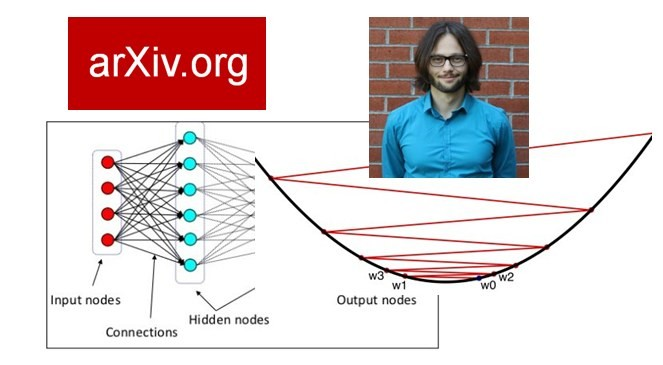
- When you ‘understand something’, what do you do? What do you do when you are learning?
- For computers, does it build itself a new piece of ram or bytes of memories for every new knowledge collected? Or not?
Maybe…
S5 - In the end
- Considering the push to AGI, what do you think of it? Is it feasible?
- What we are missing?
- What can you recollect from the conversation toward human versus machines? Or any ‘different stuff’?
- Are you afraid that you are just ‘soulless’?
Topic 2: Da Methematiks
Let’s move on to the subject everyone hates: meth.
- What do you think when it comes to mathematics?
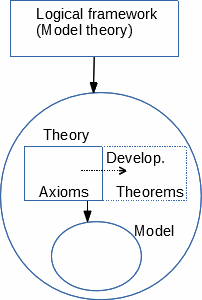
- When someone tell you of mathematics, what do you think of its foundation? The histories? Why and why?
The bik bik foundation
In your opinion, when is mathematics:
- Used superfluously (i.e. for no reason, no benefit, worse than better)?
- Used too limitedly (i.e. too simple, wrong direction, misuse of maths)?
- Right for the wrong reason, wrong for the wrong reason, right but irrelevant?
Best of all. What will you do instead?
Topic 3. Da Model
Fighting back against stuff.
I saw many works trying to formalise AI and math. One of which is How to build a conscious machine by Michael Timothy Bennett. Nevertheless, they are, indeed, quite a pain.
I posit, that the way we are doing is wrong. Not because we are not intelligent, but we are seeing from the wrong angle. We are, deliberately, trying to fit ourselves to a construct that itself do not have anything, and is surprised when it ‘kind of do’ what we design it for, and also intensely surprised when it does not what we have, that we don’t even know ourselves.
What do you think? Nay? Examples?
When you see life, of reality, and of all, do you believe that such realities are real? In what sense is it real, and,
- Per usual, are we doing stuff that change the mountain to fit the map, rather the map to fit the land?
- Conjuring trust and knowledge from such?
- Arrogantly refuse to compromise or change of belief?
- Where your own senses refuse to collaborate or fool you?
Examples?
I posit further, that the foundational theory to understand the world is the theory of model, because our world view and what we constitute of understanding and life is imperfect. So is the model in our own brain. How about that?
Can you think of such model as per human uses, and also computer uses? Additionally, will overutilizing mathematics screws this approach?
Well…
After all… What the heck is the model?
Da free-roam
Well, the secondary flow is here! We would be talking about sociological issues and certain connections to histories, and any others, that is, including
- Human psychology.
- Economic issues.
- What the heck is geopolitics? Why you even fight for lands?
- Tell us about your education stuff and why you hate it or love it (lol).
- Is mental health real?
- Should we throw all homeless people out? (Jokingly, but seriously no)
- The society etc.
- Query your own questions.
Da end
Thanks a lot guys, for coming here!